


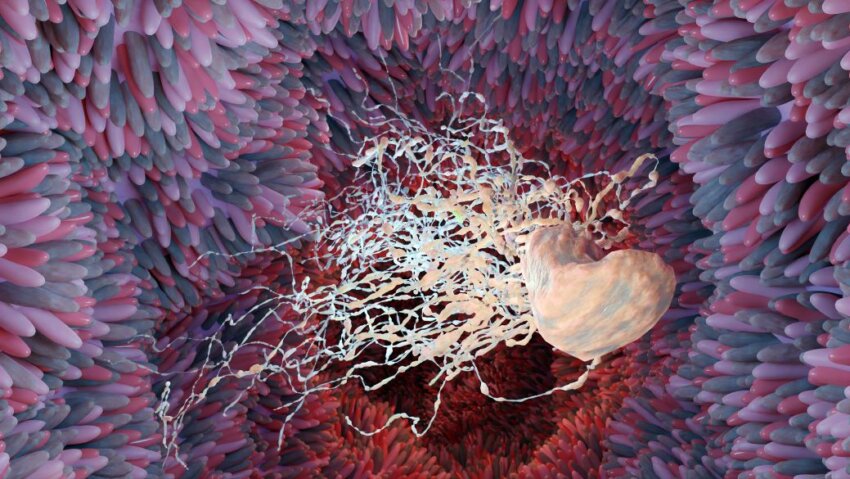
Research scientists and clinicians at UT Health San Antonio are working to halt one of the most persistent bacterial infections that silently affects millions of people worldwide. Helicobacter pylori (H. pylori) is a spiral-shaped bacterium capable of burrowing into the stomach lining and is the only bacterium known to directly cause cancer. Through leading research and advanced endoscopic techniques, UT Health San Antonio is helping to change the trajectory of gastrointestinal disease in South Texas.
Bacterium with a hidden agenda
H. pylori was discovered in the 1980s as a cause of gastric ulcers, overturning decades of medical assumptions that ulcers were caused primarily by stress or diet. The bacterium’s unique spiral shape allows it to drill into the mucosal layer of the stomach, triggering inflammation and potential long-term damage.
More than half of humans carry the bacteria, but most never have any symptoms. For some, however, the infection can lead to chronic gastritis, peptic ulcers and even gastric cancer. It is linked to approximately 76% of gastric cancer cases worldwide.
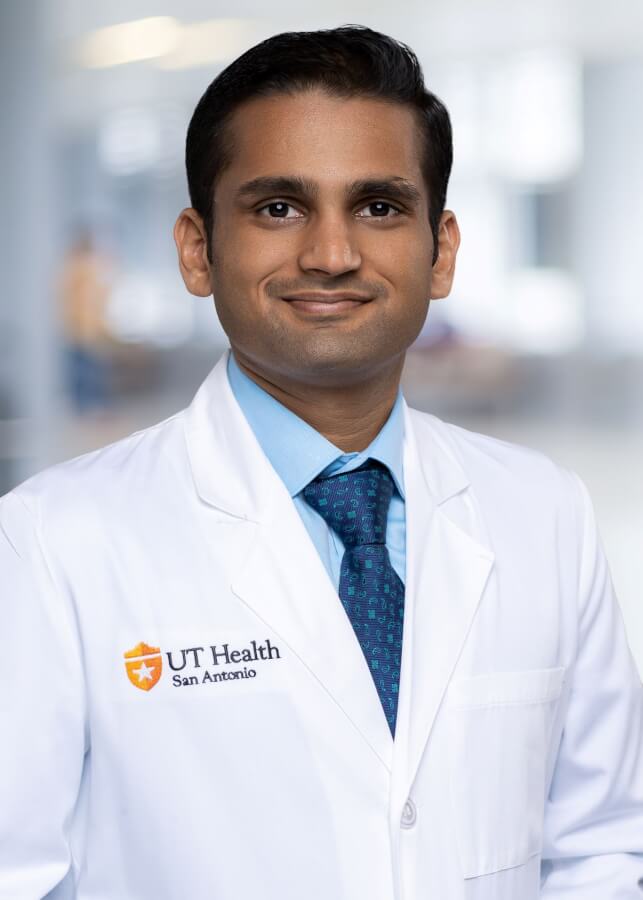
“H. pylori is one of those infections that hides in plain sight. Many patients don’t realize how long it’s been affecting them until we see small signs of chronic inflammation or early damage,” said Rajat Garg, MD, advanced endoscopist with the UT Health San Antonio Multispecialty Research Hospital and Mays Cancer Center and assistant professor in the Division of Gastroenterology and Human Nutrition at the Joe R. and Teresa Lozano Long School of Medicine.
Infection can lead to cancer
Researchers at UT Health San Antonio are studying how H. pylori can set off a host of biological actions that can ultimately lead to cancer. The infection triggers the release of the hormone gastrin that tells stomach cells to secrete more acid. Over time, this excess acid, along with other inflammatory factors eats away at the protective stomach lining and can damage DNA repair mechanisms.
Recent studies suggest that H. pylori may also reduce the effectiveness of immunotherapy in gastric cancer patients by reshaping the immune environment of the stomach.
Gastric cancer rising in South Texas
According to the National Institutes of Health, gastric cancer is the fifth most common cancer globally and the fourth leading cause of cancer-related death. While its overall prevalence in the United States is lower than in some parts of the world, South Texas experiences higher rates of gastric cancer and precancerous conditions, including chronic gastritis and intestinal metaplasia, than the national average.
“Here in South Texas, we see a higher prevalence of abnormal stomach cells that can progress to cancer,” Garg said. “This makes early detection and eradication of H. pylori even more critical in our region.”
Risk factors for gastric cancer include chronic H. pylori infection, dietary habits, genetics and family history.
“People with a family history of gastric cancer are at higher risk, and treating H. pylori in these individuals can significantly lower their risk of developing the disease,” Garg said.
Targeting resistance and refining treatment
Testing for H. pylori can be accomplished through noninvasive methods such as a stool antigen or urea breath test. For a more direct assessment, an upper endoscopy allows specialists to take biopsies from the stomach lining for analysis.
“When we detect H. pylori, we can treat it effectively,” Garg said. “Treatment typically involves a combination of antibiotics and acid-suppressing medications for 14 days. After treatment, we always confirm that the infection has been eradicated.”
Treating H. pylori infection requires a careful balance of antibiotics and acid suppression. The standard first-line combination therapy of a proton pump inhibitor, amoxicillin, clarithromycin and metronidazole remains effective in many cases, but antibiotic resistance is on the rise.
H. pylori testing is recommended for individuals who may be at a higher risk, including those with peptic ulcer disease, dyspepsia, anemia or idiopathic thrombocytopenic purpura, as well as anyone with a family history of gastric cancer. Testing is also advised for individuals from countries with elevated H. pylori infection rates. Because the bacterium can spread within households, family members of individuals who test positive are also recommended to come in for screening.
Precision endoscopy for earlier detection
The Advanced Endoscopy Program at UT Health San Antonio provides patients with access to specialized procedures such as endoscopic mucosal resection and dissection, which can remove early-stage cancers or precancerous tissue without the need for more invasive surgery.
Endoscopy also allows physicians to identify subtle changes caused by H. pylori infection before symptoms develop, providing a crucial window for prevention. In this space, UT Health San Antonio is setting new standards in visualization and analysis. High-definition imaging and AI-assisted analysis are enabling physicians to detect even subtle mucosal changes caused by H. pylori.
“The technology now allows us to see the earliest stages of mucosal damage, even before symptoms develop. By combining advanced imaging, minimally invasive diagnostics and artificial intelligence-assisted analysis we can detect early abnormalities and intervene sooner,” Garg said.
The team is also exploring non-invasive biomarkers along with endoscopic care to help identify patients most likely to benefit from certain therapies or additional monitoring.
Precision medicine for South Texas
The UT Health San Antonio Advanced Endoscopy Program integrates the latest tools and techniques to provide comprehensive gastrointestinal care for South Texas patients. From noninvasive breath and stool tests to complex endoscopic resections, the program offers a full spectrum of diagnostics and treatment.
“H. pylori is a simple infection with a simple solution that can make a big difference,” Garg said. “Our endoscopy units are equipped with state-of-the-art technology and our team works in close collaboration with oncologists and surgeons at the Mays Cancer Center. By finding and treating these infections, we can help prevent cancer and improve lives.”